
Slavery and Abolition
1587: The first slaves arrived in Buenos Aires, now the capital of Argentina, from Brazil.
1580-1640: The slave trade was the main commercial activity for Buenos Aires.
More than 70% of the value of all imports arriving in Buenos Aires were enslaved Africans, of whom came primarily from Brazil from the Portuguese slave trade.
Mid-17th century: The Jesuits and other religious orders gave rise to a notable slave population that worked and labored on their ranches, university, and churches.
End of 18th century: Slave trade increased sinificantly, and reflected the economic status of Buenos Aires (in the Atlantic economy).
1810: Buenos Aires declared independence, and the participation of slaves was critical to win in the wars of independence.
1813: The Free Womb Act freed all babies born to slave mothers, because of their efforts on the battlefield, so gradual abolition was introduced.
1853: The first Constitution of Argentina abolished slavery.
This did not apply to Buenos Aires; it was not part of the Confederation.
1861: Buenos Aires joined the Confederation, and slavery was completely abolished in Argentina. Few Works are focused on the black experience in Argentina.***
Source: http://www.oxfordbibliographies.com/view/document/obo-9780199766581/obo-9780199766581-0157.xml
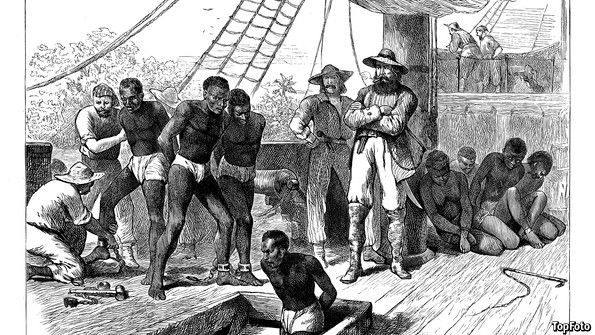
Slaves being shipped.

Statue of "The Slave" in Buenos Aires, Argentina.

Slaves in what is today Tanzania and Mozambique along the Ruvuma River.
Slaves being shipped.